
Further to these recent posts and the deaths of a lot of wildlife including leopards by way of snare traps, as I work on this issue it’s easy to see a problem in the constant blaming of others with a lack of responsibility by many of those dishing out the blame. I’ll go more into this down the track but a lot of the blame is directed at authorities and rescue teams. This is misdirected. Most of the time there are people working damn hard in wildlife protection, often in dangerous conditions and always underpaid. Of course nothing is perfect and there is a lot of work to be done on protocols and resources.
Not enough emphasis is being placed on those setting the traps. Where livelihood is threatened due to crop raiding animals, snares are often placed before there is any dialogue with authorities about the problem. The captured wild boar or deer is eaten. Where snare trapping takes place to target specifically for wild meat (bushmeat, affecting prey species numbers available to natural predators) or for high value wildlife such as leopard, authorities and anti-poaching teams are often under resourced to deal with it. All these issues are where we are aiming for progress with #AntiSnare. Our own monitoring takes place in buffer zones and community forests, that is where most of the problems are, outside protected areas.
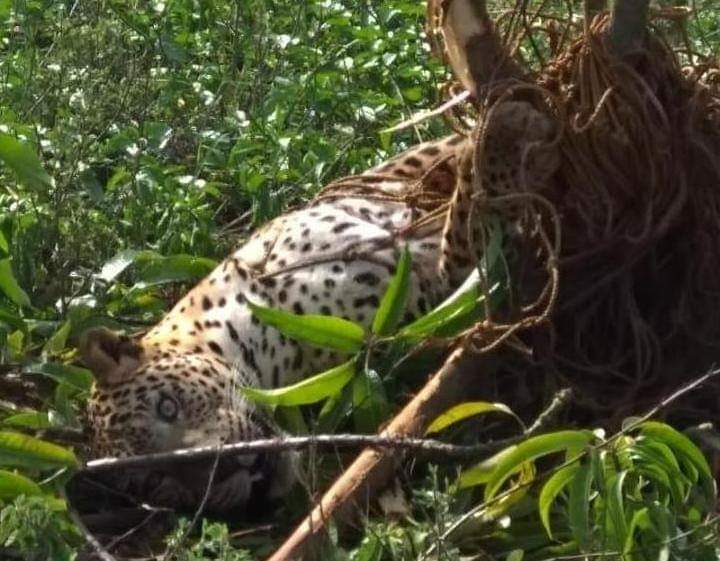
The leopard in the image died after a struggle of over 4 hours. In this case the rescue team was badly under resourced. Leopards are extremely dangerous in these conditions, they can be a difficult animal at the best of times due to their stealth and extraordinary hunting ability. That is not their fault, that is what they are, part of what makes them so remarkable and vital as a top predator.
Perhaps a few of the people who are constantly blaming all parties could actually be of help by supporting efforts. Social media has created an outrage culture which is loud on noise but often short on action. That being said, there are some terrific people who do support, they do care, just like most people working in the field. We just need more of a unified effort for what is a deadly serious problem.
