
Leopard Behaviour – A New Feature Section
17 June 2026 – Jack Kinross here and I’m please to announce the beginning of a new element here at Mission Leopard.

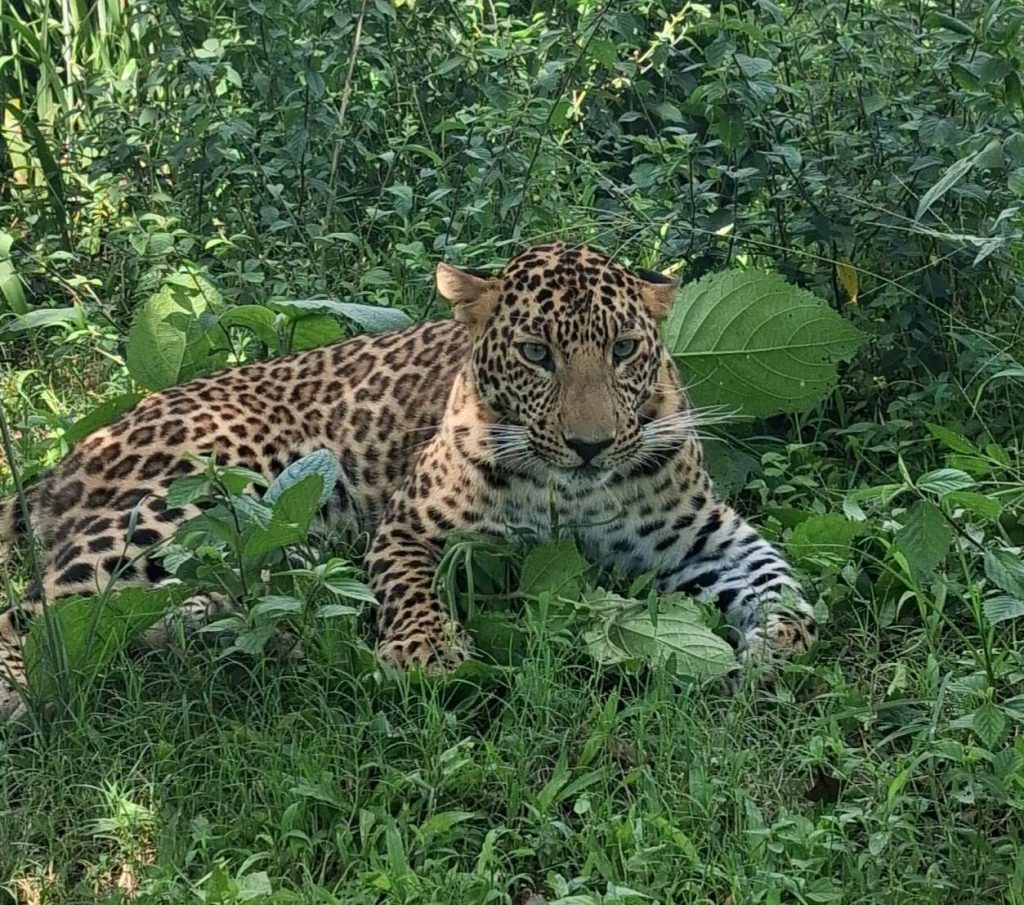
Many of you reading here know my regard for the leopard, some of you have followed my tellings of my experiences, very much related to this regard, for over a decade now. My own story telling stepped up after an experience with the leopard you see in the photograph above, Asa, the leopard of hope.
Rewilding Asa was an incredibly special time in my life, it reinforced and changed my thinking about big cats, the leopard in general, in many ways. It’s a story I haven’t fully told yet, that time will come. There were so many different dynamics in what I discovered while living with a leopard. Perhaps, the most important one, in my own aspirations in helping protect these animals animals, was and still is, leopard behaviour.
I’ve touched on the subject in my Substack and other writings but now is the time to start going deeper into the mysterious world of the leopard. As I write this on the date mentioned at the start, I’m one more sleep away from entering the territory of the leopard Thagu, another big cat I’ve written about frequently at different platforms. Of all the leopards in my life, for some reason my own journey has led me back to him, Thagu is huge Himalayan being, the apex predator in his domain, an animal that for a few years now has captured my imagination, my thinking and caused many steep uphill climbs as I try to understand him.
In some ways Thagu will be a flagship for this new section on leopard behaviour but he will be far from the only leopard featuring here. Other people involved in the conservation of this animal will be sharing insights, knowledge, data and above all their own fascination and deep interest in leopard behaviour. There’s other leopards, one of them being Muniya, a young female who has just become a mother for the first time. Different leopards, different stories, different behaviours because leopards are individuals, they have their own personalities and characteristics – they are all leopards however, they do share common traits.
The widespread nature of leopards means we have a lot of ground to cover, I hope you’ll be on the journey as much as possible, both here and at my Substack.
So now, the start of what I hope will be much greater understanding for many and with that, much greater care for an animal which does need our help.
The leopard deserves that because quite simply, they are leopards. The way leopards behave is an integral part of that story. This page along with my Substack, also brings individuality so I hope you can relate to both leopards and a leopard…
Just another grass eating leopard Leopard behaviour and keeping an open mind by Jack Kinross Jul 04, 2026
Did you know big cats eat grass? Find out more at the article and watch a video of the young leopard in the image doing that very thing, eating grass.
A Story of Jade Eyes: Learning to Be Leopard
The documentary Jade Eyed Leopard follows Toto, a young female leopard with unusually bright aquamarine eyes, through the first three years of her life in Kenya’s Maasai Mara National Reserve . Born to a mother named Fig, Toto’s story was captured by renowned filmmakers and National Geographic Explorers Beverly and Dereck Joubert, who had the rare privilege of documenting this leopard’s journey from precarious birth to young adulthood .
What makes Toto’s story so remarkable is the window it offers into the hidden world of leopard behaviour—a world that is largely nocturnal, intensely private, and rarely witnessed in such intimate detail. Using cutting-edge thermal night-vision technology, the Jouberts were able to reveal behaviours previously shrouded in darkness . We see Toto learning the essential skills that will define her life as a solitary hunter: the patient stalk, the explosive pounce, the first hesitant practice on a hare before graduating to larger prey .
The Foundation of Survival
Leopards are solitary creatures by nature—they live, hunt, and travel alone, marking their territories with scent and vocalisations to warn others away . The only time this solitude breaks is during mating or when a mother raises her cubs . In Toto’s story, we see this maternal bond in its purest form. Fig is described as an “attentive and graceful” mother, grooming Toto and playing with her throughout the journey . She teaches through demonstration and allows Toto to make mistakes—a lesson in itself. This extended period of learning is critical, as leopard cubs typically remain with their mothers for about two years before venturing out on their own .
Toto’s world is one of constant challenge. She learns to climb with agility, to drag her kills into trees to keep them safe from scavenging hyenas and lions, and to navigate a landscape where danger lurks even as she hunts . Her rare jade eyes—a genetic quirk that makes her visually unique—are matched by an equally unique spirit of experimentation: “If it moves, it’s fair game… until a porcupine calls her bluff” . This playful curiosity, the filmmakers note, is what gives her character such depth.
By the end of the three-year chronicle, Toto has made the transition to adulthood. Remarkably, she and Fig now share adjoining territories in two valleys, and even as a young adult on the cusp of courting, they meet and play—an unusual bond that speaks to the depth of their connection .
Why This Story Matters
The Joberts capture a crucial truth: in witnessing Toto’s journey, we understand that leopards are not merely victims of a trade or statistics on a page. They are individuals with personalities, with bonds, and with the will to survive against extraordinary odds. As the Jouberts noted, “We feel privileged knowing that the mother has such immense trust in us” . That trust, that access, reveals the soul of the leopard—an animal that deserves not just protection, but wonder.
Leopards now occupy just 25 to 37 percent of their historic range, and six of the nine subspecies are in significant trouble . The threats are many: habitat loss, poaching, poorly regulated trophy hunting, and conflict with humans . Yet the story of Toto and Fig offers a counterpoint. In their resilience, their adaptability, and their deep intelligence, they remind us what we stand to lose.
As Jeremy Irons’ narration poignantly concludes: “If we can learn to respect, protect, and celebrate all such creatures struggling to survive in this fragile mosaic, this jade eyed leopard may yet have a future. Hope springs eternal” .
Due to regional restrictions not everyone can watch the above video however this next one is freely available and well worth watching. Below the film are a few paragraphs explaining leopard behavioural traits as shown in both documentaries.
Behavioural Traits of the Leopard: Insights from Two Documentaries
The documentaries Jade Eyed Leopard and The Leopardess: Sudden Death offer complementary windows into the hidden world of leopard behaviour. Together, they reveal the core traits that define this most adaptable and elusive of big cats.
The Phantom’s Way: Solitary and Stealth
Leopards are fundamentally solitary creatures, and this is nowhere more evident than in the Serengeti’s gallery forests, where the leopardess of Sudden Death moves like a phantom. For days she remains almost invisible, a shadow in the thickets, emerging only to strike with devastating precision. This is the leopard’s signature: patience, silence, and the ability to disappear into the landscape. Whether in the Maasai Mara or the Serengeti, they live, hunt, and travel alone, with the only enduring bond being between a mother and her cubs during their extended rearing period.
The Crucible of Motherhood
Both documentaries centre on the mother-cub relationship, revealing it as the crucible of leopard behaviour. In Jade Eyed Leopard, Fig is shown as an “attentive and graceful” mother, grooming, playing, and patiently teaching Toto through demonstration and the allowance of mistakes. In Sudden Death, the leopardess is driven by a single, fierce dedication: the survival of her five-month-old cub. Every hunt, every calculated risk, is for him. This maternal investment is extraordinary—cubs remain with their mothers for up to two years, learning the complex skills they will need to survive alone.
Hunting: The Art of Patience and Power
The hunt is a study in contrast. Both films capture the same sequence: long periods of patient stalking, the body low to the ground, muscles coiled, followed by an explosive pounce. The leopardess of Sudden Death strikes “out of nowhere,” a sudden death for her prey. Toto, the young jade-eyed leopard, is shown practising first on hares, graduating to larger prey as her skills develop. This blend of instinct and learning is critical; a leopard must master the stalk, the approach, and the killing bite through years of practice and the guidance of its mother.
Climbing and Caching: The Arboreal Advantage
Both documentaries highlight the leopard’s remarkable arboreal abilities. Toto learns to climb with agility and to drag kills into the safety of trees, protecting them from scavenging hyenas and lions. This caching behaviour is a key survival strategy, allowing leopards to store food and eat in relative peace. The strength required to hoist prey often heavier than themselves is a testament to their power relative to their size.
Nocturnal Mastery and Sensory Acuity
Leopards are predominantly nocturnal, operating under cover of darkness. Jade Eyed Leopard uses thermal night-vision technology to capture behaviours otherwise hidden—hunting, moving, and interacting in the night. Their exceptional vision, hearing, and stealth make them formidable predators in low-light conditions. The leopardess of Sudden Death is described as a “phantom” because she is so rarely seen; she exists in the shadows, emerging only when the moment is right.
Territoriality and the Bonds of Place
By the end of Toto’s story, she and Fig occupy adjoining but separate territories, maintaining their independence while retaining a bond strong enough for occasional play. Leopards mark their domains with scent, scratches, and vocalisations—the sawing call that echoes through the night—ensuring others know where boundaries lie. This reduces direct conflict and allows for a network of overlapping ranges that define the leopard’s world.
Adaptability: The Key to Survival
Underpinning all these behaviours is a profound adaptability. Leopards thrive in habitats ranging from rainforest to desert to mountain—a flexibility reflected in their behaviour. The Serengeti leopardess hunts in gallery forests; Toto lives in the open savannah of the Maasai Mara. Yet both share the same core strategies: patience, stealth, arboreal skill, and fierce maternal care. This ability to adjust hunting techniques, diet, and activity patterns to local conditions is what has made the leopard the most widely distributed of all big cats.
A Shared Future
Both documentaries end with a note of precarious hope. To repeat the words of Jeremy Irons, narrating Jade Eyed Leopard, concludes: “If we can learn to respect, protect, and celebrate all such creatures struggling to survive in this fragile mosaic, this jade eyed leopard may yet have a future.” The leopardess of Sudden Death faces her own perilous encounters, her cub’s survival hanging in the balance. In their resilience, their intelligence, and their fierce dedication to their young, these leopards remind us what we stand to lose—and why understanding their behaviour is the first step toward protecting them.
This page is continually being update and runs in conjunction with the Substack – The Leopard.
Everything we do at Mission Leopard has the ultimate goal of evoking the Spirit of the Wild.
